BUDGET
No Plan, No Transparency: Pritzker’s Executive Order Still a Mystery
In September Governor Pritzker signed Executive Order 2025-05, directing state agencies to identify immediate spending reductions by October 23rd. He has yet to release any details about these proposed cuts.
The Executive Order directing Pritzker’s agencies to identify spending cuts stands in sharp contrast to the record-high budget Democrats passed in May, one that raised taxes, swept dedicated funds, and funneled hundreds of millions into pork projects in Democratic districts. The Governor happily signed this budget into law and proudly promoted it.
With no results released from the Executive Order, House Minority Leader Tony McCombie filed a Freedom of Information Act request on October 23rd. But on November 6th, the Governor’s office denied House Republicans’ request, claiming the information was merely “internal deliberations.”
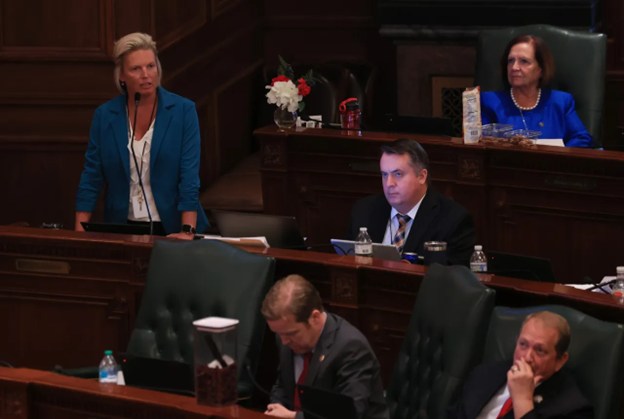
In response, House Minority Leader Tony McCombie released the following statement:
“The Governor doesn’t need an executive order to control state spending. He already has full authority to manage his agencies. So why issue one? It was a political move to gaslight Illinois families into thinking he’s suddenly serious about fiscal discipline. Weeks later, he still hasn’t released a single detail. No plan. No transparency. No accountability. I’ll keep calling this out, because taxpayers deserve the truth, not political stunts.”
Read more about the Executive Order here.
Illinois’ strained budget faces significant, multi-billion-dollar SNAP challenge
The federal/state “food stamp” system, called Supplemental Nutritional Assistance Program(SNAP),could soon put a massive, multi-billion-dollar strain on Illinois’ already struggling budget. SNAP eligibility is determined by a household’s income, the size of a household’s family, and other factors. Most of the cost of these SNAP credits are paid by the U.S. federal government.
All 50 states are enrolled in the SNAP program, and each state has designated a social-work agency to perform these interview functions and enroll households in the program. In Illinois, it is the Illinois Department of Human Services (IDHS) that does this work. The IDHS agency operates help centers, conducts interviews, and signs people into the SNAP program.
The 50 states that have signed up for SNAP have all agreed to take on the administrative costs and burdens of administering the program, including eligibility enforcement. The social workers who sign people up for SNAP are supposed to verify the eligibility of each person who is admitted into the program. Recent studies have shown, however, that some states including Illinois, have built up what is called an “error rate.” This is a legal phrase that means that some of the households that have signed up for SNAP are getting benefits for which they are not eligible. With the goal of reducing the U.S. federal budget deficit, Congress earlier this year enacted a series of sanctions upon noncompliant states.
With a current error rate above 10%, Illinois is highly liable for the imposition of SNAP sanctions. These sanctions could include reduction in the amounts of money paid to Illinois to help fund the SNAP program, a severe reduction in these same payments, or the complete elimination of these payments. This would be a federal penalty against Illinois of up to $4.7 billion per year. The SNAP payments, which are a cash flow of at least $350 million/month, are an essential element of continuing operations for many Illinois households and the retailers who accept SNAP benefits. The U.S. Department of Agriculture (USDA), which administers the federal end of the SNAP program, has adopted a “no forgiveness” policy against the improper awards of SNAP benefits. The IDHS has informed legislators that the USDA is currently scrutinizing Illinois SNAP enrollments, with enforcement of federal penalties a distinct and immediate possibility.
Illinois General Assembly panels, including Illinois House – Appropriations/Health and Human Services (HAPH) and the Joint Committee on Administrative Rules (JCAR), have questioned IDHS senior personnel about the urgent need for Illinois to clean up SNAP enforcement and reduce its plus-10% eligibility error rate. Although the Department has responded that they are aware of the problem and are taking unspecified steps to correct it, the imposition of severe penalties against Illinois taxpayers remains a distinct possibility.
In Case You Missed It: Visit my website to see my response back in September!
ENERGY
ICC approves another hike in Ameren natural gas rates
2.3 million customers, including many homes in Downstate Illinois, are slated to pay $150 million more for the natural gas many of them use for cooking and heating. The rate hike was awarded to Ameren, the major St. Louis-based utility holding company that provides electricity and natural gas to much of Downstate Illinois.
Other Illinois customers buy natural gas from Chicago-based Peoples Gas (a subsidiary of the WEC Energy Group) and from suburban Chicago-based Nicor Gas (a subsidiary of the Southern Co.) and North Shore Gas (a subsidiary of Peoples Gas). All three firms have recently sought, or are seeking, natural gas rate hikes.
The ICC-approved rate hike for Ameren natural gas customers was announced on Wednesday, November 19.
Physician-Assisted Suicide Bill
In the early morning hours of the last day of veto session, without warning, the Senate advanced SB1950, the physician-assisted suicide bill. Late Thursday night, the House followed, passing it 63–42, just three votes above the minimum required. A number of Democrats joined Republicans in opposition, underscoring how divided Illinois is on legislation that deserves far more transparency and discussion.
Some of the most vocal concerns come from Illinois coroners, who were not invited to the table. These are the professionals who investigate deaths, protect vulnerable victims, and uncover abuse. Their warnings should not be ignored.
Peoria County Coroner Jamie Harwood explained that he investigates every single hospice death, but under SB1950: “We wouldn’t even be notified or called into that at all, which is the unfortunate thing.”
Harwood stressed he isn’t opposed to the concept, but to the dangerous lack of oversight: “I believe this decision needs more oversight than what is currently in the law.”
Coroners take an oath to find the truth. SB1950 prevents them from doing that: “As coroners, we are sworn to accurately determine cause and manner of death. SB 1950 introduces restrictions that prevent coroners from fulfilling that oath. This bill places families, investigators, and public health agencies at a real disadvantage.”
That should concern every Illinoisan.
During debate, I shared my personal experience caring for my mother as she battled throat cancer. The painful moments, the conversations we shared, the time we had together and those would have been cut short if a law like this had been in place.
As I said on the House floor: “We had heartfelt conversations when I was feeding her through her feeding tube that we never would have had if this would have been the law because she wouldn’t have done it for her pain, she would have done it for mine… This is not the bill, this is not the way that this needs to go.”
Illinois can provide dignity and compassion at the end of life without silencing coroners, weakening investigations, or removing critical protections for seniors, people with disabilities, or those facing pressure or abuse. There are safer, humane, proven options that deserve expansion and public investment, including:
- Hospice care
- Palliative care and sedation
- Palliative sedation
- Advance directives and living wills
- POLST and Do-Not-Resuscitate orders
- Modern pain-management therapies
- Caregiver support and respite programs
These are compassionate, responsible end-of-life approaches that protect people and protect the integrity of our investigative system.
Rushing SB1950 through in the dead of night wasn’t leadership. Offering real alternatives, demanding safeguards, and standing up for vulnerable Illinoisans, that is leadership. And that is the path we will continue to take.
HIGHER EDUCATION
Nearly 190,000 students enrolled in Illinois public universities
The consolidated figures for Illinois’ twelve public four-year colleges and universities reached a 10-year high, with 189,791 students enrolled. These numbers were paced by a 6.8% increase in first-time enrollments by freshman and first-year students intending to study full-time. The headcounts of dual-enrollment students, and transfer students, to Illinois public four-year colleges and universities also increased.
Illinois public college institutions have taken steps to expedite the process that Illinois students use to apply for and get admitted to Illinois public colleges and universities. The One Click College Admit webpage contains sub-pages oriented towards high school seniors, and towards high school juniors who are starting to look at their next steps. High school juniors are urged to open an account with OneClickAdmit, and seniors are urged to update their existing accounts. The program will expand in January 2026 to cover community college students who want to transfer to a four-year institution. [Note: The University of Illinois Urbana-Champaign (UIUC) and the University of Illinois at Chicago (UIC) are members of the Common App system and are not members of the One Click Admit program.]
Not all of Illinois’ twelve four-year public colleges and universities show good enrollment numbers in fall 2025. Macomb-based Western Illinois University (WIU), and Normal-based Illinois State University (ISU), with their geographic ties to economically and population-challenged Central and Western Illinois, continued to post flat or negative enrollment numbers in fall 2025.
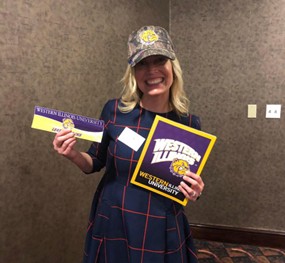
As a proud WIU grad, it’s disappointing to see Western continue to face declining enrollment while other universities are growing.
Illinois should focus on strengthening high-school pipelines into regional universities, expanding workforce-driven programs, boosting outreach and marketing, and building stronger partnerships with local employers so students see a clear path from college to career.
TRANSPORTATION
Digital drivers’ licenses now available for iPhone users
The new Illinois digital ID card became available this week. It supplements, rather than replaces, the familiar plastic drivers’ licenses or ID cards carried by most Illinois adults. The digital ID card can be loaded into Apple Wallets for iPhone users. The Illinois move follows the policies of other states that are also moving towards the availability of digital-stored identification information. If they meet “Real ID” standards, the digital IDs issued by the 20 states that have signed onto this new technology are now acceptable at places of U.S. federal security, such as airport security gates (https://www.nprillinois.org/government-politics/2025-11-18/digital-drivers-licenses-ids-available-to-illinois-residents-starting-wednesday).
The digital ID app contains widget switches to enable the holder to turn ‘on’ or ‘off’ some of the information, other than the holder’s age, lodged on the identification card. This is useful in case of certain non-driving circumstances in which not all a person’s identity needs to be shown. For example, a person may be asked for ID by a bartender or a storekeeper at a place where alcohol is being sold. Presenting a plastic ID in a private-sector setting includes the disclosure of the holder’s physical address, but the presenter of a digital ID can switch this address information to ‘blank.’
In a law enforcement setting, Illinois residents will continue to be required to show their physical ID card including all of the information printed on it, to enable law enforcement to complete an identification check upon the person being stopped or detained.
As of mid-November 2025, the Secretary of State’s rollout currently applies only to Apple Inc. iPhones. Motorists and state ID-holders may choose to open their Apple Wallets in order to start the process of loading the Illinois digital ID card. Illinois has worked with Apple to ensure compatible app technology. The Secretary of State’s office indicated that it is their intent to spread this technology to also cover Android phones, which should take place in the near future.
THANKSGIVING
Wishing all a Happy Thanksgiving
The four-day Thanksgiving weekend is traditionally the heaviest travel period of the year. As in previous years, the Illinois State Police is working with local police departments and sheriffs to increase holiday enforcement of moving violations and DUI’s. Please take your time and drive safely to and from Thanksgiving celebrations.
Illinois House Republicans wish you all a safe and Happy Thanksgiving!