AFFORDABILITY
Democrats Want to Tax Your Campfires
When it comes to staying warm and enjoying time outdoors, Illinois House Democrats seem determined to make it as expensive as possible. First came their massive energy rate hike last fall. Now, Representative Murri Briel and House Democrats are proposing legislation that would allow municipalities to charge a fee just for lighting a campfire.
House Bill 4459 would open the door for local governments to impose a $5 charge on open burns, including campfires. For families, campers, and anyone simply trying to enjoy the outdoors, this is effectively another tax on everyday life.
For a party that claims to be fighting for affordability, it’s fair to ask: how does taxing campfires accomplish that? The answer is simple. It doesn’t. This is just the latest example of Democrats driving up the cost of living for Illinois families.
Their record speaks for itself:
- Passed an $8 billion energy rate hike to subsidize unreliable green energy.
- Approved a transit bailout that allows for toll increases and higher RTA sales taxes.
- Enacted the largest budget in state history, relying on $700 million in new taxes.
For Illinois Democrats, if families enjoy it, they will find a way to tax it. Whether it’s energy, transportation, or now even a campfire, their approach continues to make Illinois less affordable.
House Republicans remain committed this legislative session to real solutions that address affordability by reining in spending, cutting taxes, and opposing unnecessary taxes and fees like the campfire tax. Illinois families deserve relief, not another bill to pay.
With Bag Tax, Democrats Keep Raising the Cost of Living
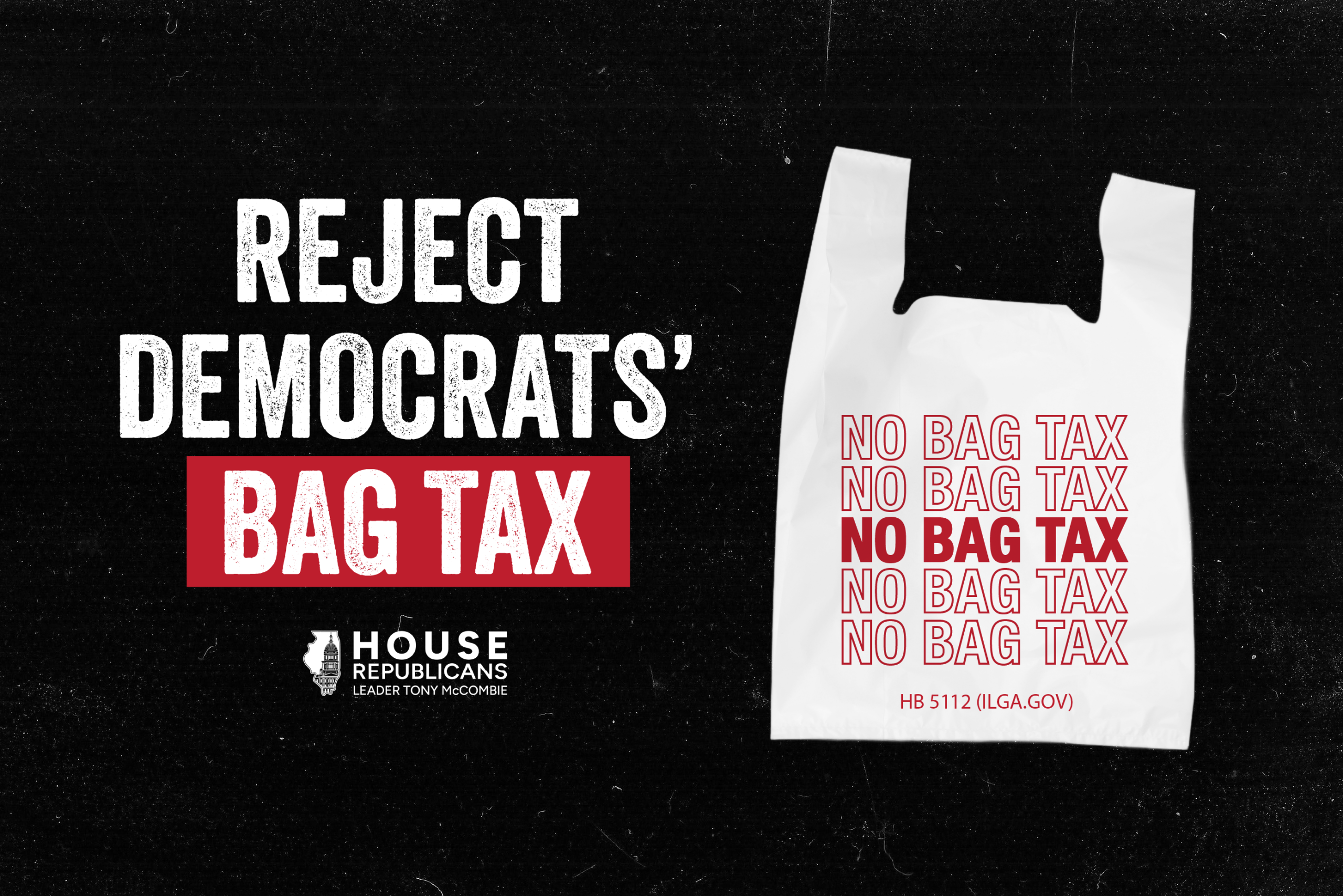
Democratic State Representative Laura Faver Dias has filed a bill to bring back the Democrats’ proposed bag tax, just another example of their push to raise the cost of living on Illinois families.
As more legislation is introduced, it’s becoming clear that Democrats’ agenda for the 2026 session is to make everyday life even more expensive. Under Faver Dias’ proposal, a new carryout bag tax would be imposed and then increased by five cents each year through 2030. The tax would apply to paper, plastic, and even reusable bags.
Bag fee schedule:
- 10 cents per carryout bag starting January 1, 2027
- 15 cents in 2028
- 20 cents in 2029
- 25 cents in 2030
As if working families weren’t already feeling the squeeze, this is just the latest example of policies that drive up costs. And it comes on the heels of another Democrat proposal that would charge families a fee just to light a campfire.
And let’s not forget, Democrats have already:
- Imposed an $8 billion energy rate hike last fall
- Passed the largest budget in state history, packed with tax and fee increases
- Made Illinois one of the most expensive states in the country
Just last month, Speaker Welch claimed Democrats were fighting for affordability. But based on the bills they’ve filed so far, it’s clear they’re doing the exact opposite.
House Republicans have continued to call for lowering the cost of living and reining in out-of-control spending. We have filed numerous bills to help working families, including Representative Spain’s HB 1383 to eliminate taxes on tips.
I released the following statement in response: “Raising energy rates, reviving bag taxes, and proposing fees on campfires isn’t affordability, it’s a pattern of making everyday life more expensive for Illinois families.”
BUDGET
CGFA reports mixed revenue picture for January 2026
The General Assembly’s nonpartisan fiscal watchdog, the Commission on Government Forecasting and Accountability (CGFA), released its January 2026 revenue report ahead of Governor Pritzker’s FY27 budget address on February 18.
The report shows modest growth in state tax revenues, with general revenues up 1.8% year-over-year, an $82 million increase driven by income, sales, and estate taxes.
At the same time, federal funding to Illinois dropped sharply, down $169 million compared to last year. These federal dollars support critical programs like Medicaid, SNAP/food assistance, and education.
The decline comes as the federal government tightens oversight to reduce fraud and abuse in social welfare programs. Illinois has shown partial or non-compliance with several federal directives, and Washington has indicated it is taking action against non-compliant states.
Because Illinois law requires these programs to continue regardless of federal reimbursement, the loss of federal funding could worsen the FY27 budget gap that begins July 1, 2026—adding more pressure to an already strained state budget.
Governor Pritzker talks about balanced budgets, but his administration’s failure to comply with federal requirements is putting Illinois taxpayers on the hook. When Washington pulls back funding, families here still pay the price.
CHICAGO BEARS
The Chicago Bears are eyeing a move to Indiana
Since 1921, the Chicago Bears have played football in the city of Chicago. This could, however, soon change. A bill to set up and subsidize the construction of an NFL stadium in Northwest Indiana is moving rapidly through key stages of legislative approval in Indianapolis.
The “Indiana Bears” bill, already passed by the state Senate, is now being sponsored by the Speaker of the Indiana House of Representatives. Insider Indiana Business sees the speaker’s sponsorship as a sign that enactment of the bill could be imminent. Passage of the bill in Indianapolis would be a powerful incentive to Chicago Bears ownership to move away from their current ties to Illinois.
Chicago Bears ownership, which continues to be concentrated in the McCaskey family, has made no secret of its desire to move out of historic Soldier Field. Almost as old as the Chicago Bears themselves (it opened in October 1924), the Chicago lakefront stadium no longer conforms to current National Football League and global mega-arena standards. The Bears have purchased property in Arlington Heights, Illinois, to build a new stadium, but the State of Illinois has so far been reluctant to assist with this effort. Some units of local governments and education are also expressing concerns about the initiative.
The state of Indiana has a long record that trends toward the aggressive pursuit of sports teams and construction of sports infrastructure. If they move, the Bears would be hosted by the proposed new Northwest Indiana Stadium Authority, which would be based in the Lake County, Indiana area. The legal language to create and operate the new NW Indiana Stadium Authority contains organizational elements that track the existing Indiana Stadium and Convention Building Authority, an operating football stadium authority in Indianapolis. After the Indiana Convention Center built the Hoosier Dome in 1984, the historic Colts NFL franchise moved from Baltimore to Indianapolis in March 1984. The Indiana Stadium and Convention Building Authority has since built Lucas Oil Stadium (2008) to house the team.
EDUCATION
Illinois Must Make School Choice a Reality
As school choice continues to be stifled in Illinois, I have made strides to advocate for Illinois families and work with the federal government to make it a reality.
Last summer I wrote a letter to congressional leadership in support of the federal Educational Choice for Children Act saying, “I believe our best foot forward is to empower parents to choose the learning environments that best meets their children’s individual needs. Regardless of funding debates, we must recognize that traditional public schools cannot be the only option available to families, particularly in underserved communities.”
I have gone a step further to file legislation in the Illinois House:
- HB 4098: requires the State Board of Education to create a list of scholarship organizations that meet the requirements of Section 70411 of the One Big Beautiful Bill Act to facilitate opting the State of Illinois into the school choice tax credit provisions of the One Big Beautiful Bill Act.
- HB 4099: requires the State Board to create a list of scholarship organizations and grants the State Board the authority to transmit the list to the federal government to opt Illinois organizations into the federal tax credit.
The Educational Choice for Children Act, signed into law by President Donald Trump on July 2, 2025, creates a federal tax credit for donations to approved scholarship organizations– which include funds for tutoring, fees for enrollment, educational therapies for students and other academic programs. For Illinois to take advantage of this tax credit, the state must opt-in to allow its students to accept the donations. The state, under direction from Governor Pritzker, has failed to do so.
According to a report by the Illinois Policy Institute, while at least 28 other states benefit from this tax credit, Illinois does not. Further, Governor JB Pritzker has until January 1, 2027 to opt-in to this credit.
Read more about this in an OpEd I wrote on school choice: McCombie Backs Educational Choice Act to Bring Back Tax Credit Scholarships – Tony McCombie.
PENSIONS
Illinois’ pension systems are running a staggering $140 billion deficit
The State of Illinois operates five “state-managed” pensions systems that provide defined pension benefits to a wide variety of public-sector employees. Beneficiaries include public school teachers and educators, State government workers, State university educators, judges, and members of the Illinois General Assembly. Because these are contractual obligations of the State, professional actuaries can look at the age profiles of the future beneficiaries and develop relatively close estimates of how much money will be paid to them, as a group, in between their retirements and their deaths.
House Republican Rep. Steve Reick in one of the people who have done these calculations. He has found that for these five systems, this calculation generates a high-quality estimate of a deficit of $140 billion. Different actuarial assumptions can, for the same population, generate projected State deficits of $200 billion or more. In any case, this “pension gap” is creating massive additional woes for Illinois’ troubled credit rating and for the burdens faced by Illinois taxpayers as they try to fill this gap.
This week, Gov. JB Pritzker asked the State to extend the State’s pension buyout program. In this program, persons with vested pension status are asked to consider accepting an immediate lump sum in lieu of future pension payments. Pritzker also suggested the State could use money from the Income Tax Refund Fund for pension commitments.
I believe that the pension buyout program, originally championed by Rep. Mark Batinick, is a voluntary, responsible option that helps reduce long-term pension pressure while giving retirees flexibility.
UPCOMING EVENTS AND UPDATES
Last call for valentines! The Valentine’s Day Card Drive collection period ends tomorrow; if you have a card, send it my way so I can deliver it in time.
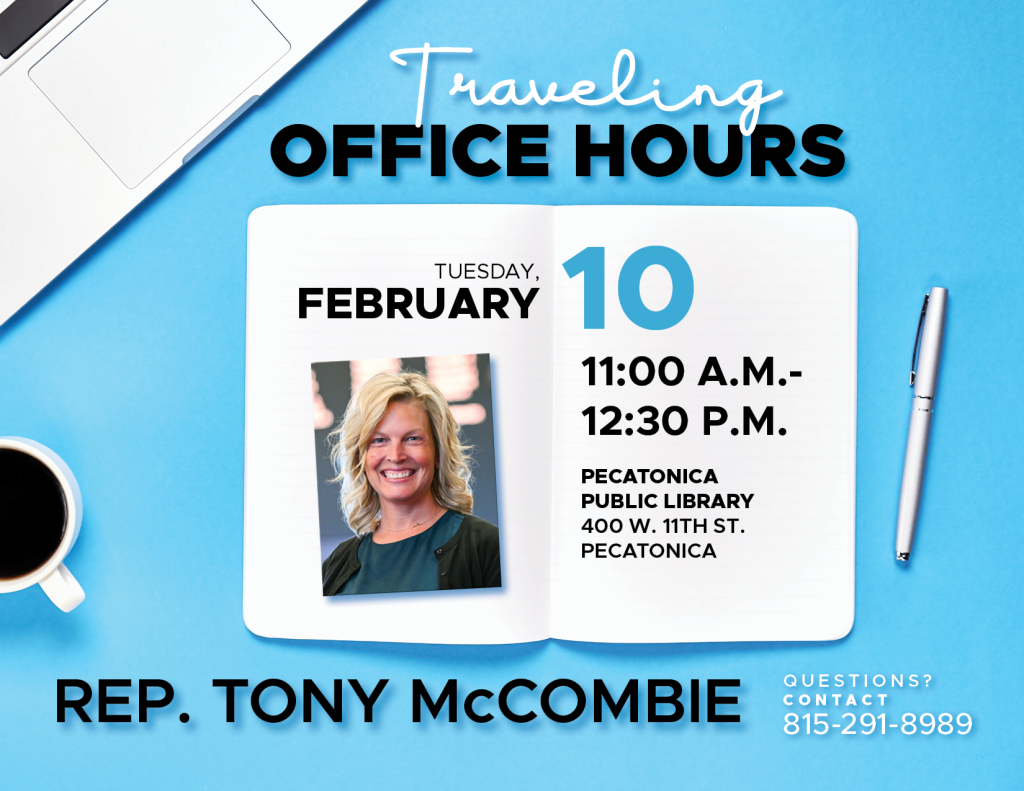
Don’t miss the next opportunity for office hours! Catch me in Pecatonica on February 10th! There will be more to come in March- stay tuned!
Know someone who is making a great impact locally?! Nominate them for the upcoming Women to Watch program on April 22nd in Springfield. Learn more on my website: RepMcCombie.com.