DAYLIGHT SAVING TIME
Clocks spring forward on Sunday
Throughout Illinois, clocks will move forward one hour this Sunday to mark the beginning of Daylight-Saving Time. Illinois will be on Central Daylight Time, which we share with our neighboring states of Iowa, Missouri, and Wisconsin, and many of the counties within our other neighbor states of Indiana and Kentucky. Illinois will remain on Daylight Saving Time until Sunday, November 1, the day after Halloween.
ILLINOIS’ ECONOMY
Moody’s and WalletHub Paint the Real Picture
“Everything is too damned expensive,” Governor Pritzker said during his budget address last month. But instead of taking responsibility for Illinois’ struggling economy, continued outmigration, and high tax burden, the governor once again pointed fingers at Washington, D.C.
Illinois families know these problems didn’t suddenly appear in 2025. After years of one-party rule and policies under Governor Pritzker, families are being taxed out of the state and economic growth continues to lag behind the rest of the country. Recent reports from Moody’s Analytics and WalletHub help explain why.
Moody’s Analytics Illinois Economic Forecast
- “Illinois’ economy will underperform the Midwest and the U.S. in the coming year.”
- “Below-average population trends and deep-rooted fiscal problems such as mounting pension obligations and a shrinking tax base represent the biggest hurdles to stronger economic performance.”
- “Persistent out-migration will weigh on the strength of employment and income gains.”
- “The state’s performance has been weaker than that of the region and the nation.”
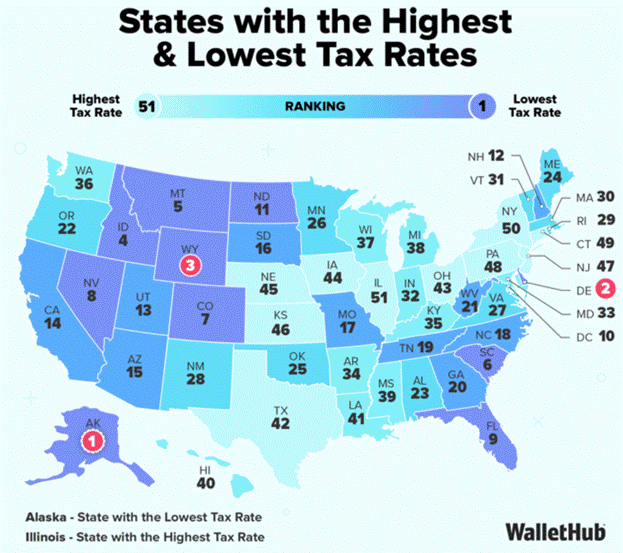
- According to a recent WalletHub report, Illinois ranks No. 1 in the nation for the highest tax burden.
- Illinois’ overall state and local tax rates are 53% higher than the U.S. average.
- Illinois residents face one of the highest combined state and local tax burdens in the country.
- As a result, taxpayers in Illinois pay a larger share of their income in taxes than residents in most other states, putting additional pressure on families already struggling with rising costs of living.
Together, these reports paint a clear picture of Illinois’ weak economic outlook. High taxes, slow economic growth, and ongoing outmigration are warning signs that the state is moving in the wrong direction.
While Governor Pritzker continues to blame Washington, the reality is that years of overspending and tax hikes in Springfield have left Illinois families paying the price. House Republicans are fighting to change that by putting forward policies that improve affordability and restore fiscal stability, including legislation like Representative Dan Ugaste’s HB 9, which would provide property tax relief for Illinois homeowners and Representative Ryan Spain’s HB 1383 to provide tax relief on tipped income.
BUDGET
New State of Illinois revenue numbers released for February 2026
For February 2026, the Commission on Government Forecasting and Accountability (CGFA) reported relatively healthy overall State general funds revenues, with a net year-over-year increase of $321 million in general revenues for the month.
However, one large area of weakness was Illinois corporate income tax revenues, which were down $23 million year over year. Changes in State corporate income tax collections were attributed to shifts in federal and global income reporting standards, with increasing proportions of income historically reported as Illinois income now attributed to operations in other jurisdictions. Changes in the treatment of State and local corporate personal property tax income and bookkeeping practices have also affected reported Illinois corporate income tax collections.
Illinois general funds inflows were held harmless from this decline by strong showings from other areas in February 2026. Net year-over-year increases included $150 million in individual income tax payments and collections, $60 million in insurance taxes, $30 million in sports wagering revenues, and $30 million in payments from federal sources reflecting federal aid from Washington, D.C. These increases, totaling $270 million, made up the great majority of the $321 million year-over-year increase recorded across all February 2026 revenue lines.
Much of Illinois’ general funds come from paycheck income tax deductions, which depend on job creation in Illinois. Unfortunately, Illinois’ unemployment rate remains higher than the national average. With a posted unemployment rate of 4.6% as of December 2025, Illinois ranked 38th in the nation, with only ten states experiencing higher joblessness.
I had the following response: “At the same time, Illinois continues to lose jobs as businesses close, scale back, or move operations to states with a more competitive business climate. High corporate tax rates, excessive red tape, and some of the highest property taxes in the nation are making it harder for employers to stay and grow here. “These losses are not just numbers on a report. They represent lost paychecks, fewer opportunities for families, and less economic growth for our communities. If Illinois wants stronger revenues in the future, the solution isn’t more taxes or mandates — it’s creating a business climate where employers want to invest, hire, and grow right here in Illinois.”
EDUCATION/TAXES
Poll: Most Illinois voters support opting into scholarship program
Nearly 55% of Illinois voters support the state opting into the Federal Scholarship Tax Credit Program. But it’s up to Gov. JB Pritzker to opt Illinois into the program. Only about one in five oppose him doing so.
More than half of Illinois voters support the state opting into a federal program to let donors help students find extra academic help, according to a new poll.
Only 22% oppose or strongly oppose the move.
Nearly 55% of 579 registered Illinois voters favor the state opting into the Federal Scholarship Tax Credit program. The voters were polled Feb. 9-11 by M3 Strategies for the Illinois Policy Institute. […]
Illinois has until Jan. 1 to opt into the Federal Scholarship Tax Credit Program. Doing so would mean students could begin taking advantage of these extra education dollars as soon as next year.
Students in public or private schools can use the scholarship money for educational services such as tutoring, additional educational classes, books or online educational materials, fees for standardized or college admissions exams and fees for dual enrollment.
That means public school students who may be struggling in certain academic areas or needing extra help or materials won’t have to leave their local public school for the support or opportunities they need.
The money also can be used for educational therapies for students with disabilities enrolled in the public school system or in a private or homeschool.
The Federal Scholarship Tax Credit Program will not divert federal or state money from public schools. There is no cost to states — only the benefit of more help for students.
The scholarships are donated by taxpayers, who will get an annual dollar-for-dollar federal tax credit of up to $1,700 for a qualified contribution to a scholarship-granting organization.
If Illinois does not opt into the program, state residents can still get the tax credit, but the scholarship money would go elsewhere. No Illinois students would be eligible for the funds.
The tax credit is federal and will take effect no matter what Illinois decides. With broad support for opting in among Illinois, state leaders’ response should be clear.
Illinois families already send their federal tax dollars to Washington. If Illinois refuses to opt into this scholarship program, those dollars will simply help students in other states instead of helping our own kids. That’s unacceptable.
This program allows taxpayers to donate to scholarship organizations and receive a federal tax credit of up to $1,700, with those funds going directly toward tutoring, learning materials, testing fees, and specialized services for students. (Education Week) The choice is simple: either Illinois students benefit from these resources, or our tax dollars are sent to other states that are willing to support their families. Illinois should opt in and keep these opportunities here at home.

LOCAL GOVERNMENT
Pritzker’s Latest Power Grab Targets Local Governments
Governor JB Pritzker has spent months attacking the federal government for overreach. Yet here in Illinois, he continues to push proposals that do the very same thing, taking away critical funding and stripping local control from communities across our state. Time and again, Governor Pritzker has tried to centralize more power in Springfield while leaving local governments with fewer resources and less authority.
Just look at his latest proposals:
Local Government Distributive Fund (LGDF) Funding Cut
- Governor Pritzker is proposing another cut to the Local Government Distributive Fund (LGDF), which would take roughly $60 million away from municipalities and counties across Illinois.
- These funds support essential local services such as emergency response, public works, and public safety.
- LGDF funding helps communities offset costs so local leaders can keep property taxes and fees lower for residents.
- When Springfield takes away these funds, local governments are left with fewer options and families are often left paying the price.
BUILD Illinois Strips Away Local Control
- During his budget address, Governor Pritzker proposed a sweeping zoning overhaul that would limit local governments’ authority over what can be built in their communities.
- The proposal would restrict municipalities’ ability to control development on property zoned for residential use.
- By weakening local input, Springfield politicians would gain more power to dictate what gets built in communities across Illinois.
- Illinois communities vary widely, and a one-size-fits-all mandate from Springfield will not solve every community’s housing challenges.
As Governor Pritzker moves to strip away funding and local control from municipalities across Illinois, he continues to centralize more power in Springfield. House Republicans are pushing back against Governor Pritzker’s proposals by advancing legislation such as Rep. Kyle Moore’s HB 4294 to fully fund the LGDF.
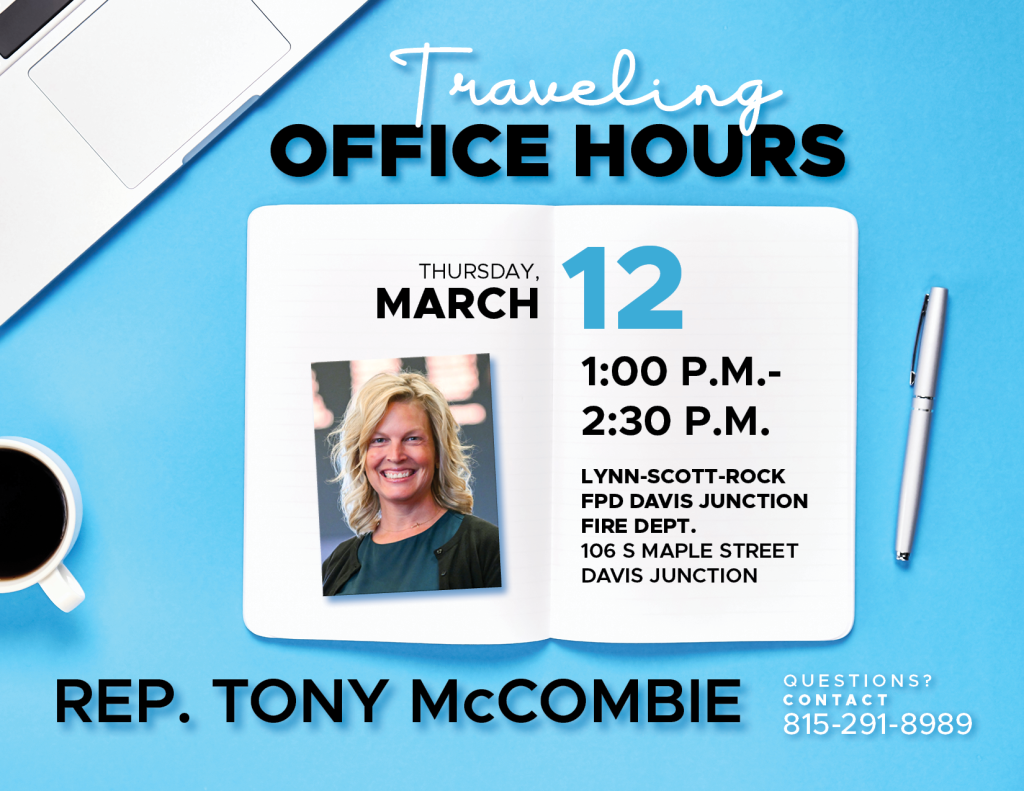
UPCOMING EVENTS There are more opportunities in March for Traveling Office Hours. Check out the details below: